



















Now Reading: A Beginner’s Guide to the Tech Trends Shaping Our Future
-
01
A Beginner’s Guide to the Tech Trends Shaping Our Future
A Beginner’s Guide to the Tech Trends Shaping Our Future



Emerging technology trends like AI, Electric Vehicles, and the Metaverse are shaping our future. These innovations are changing healthcare, farming, and how we connect. Understanding them helps us adapt and prepare for new opportunities in a rapidly evolving world, right here in India.
Have you ever looked at a new smartphone or a smartwatch and wondered, “How does technology keep getting smarter?” It feels like every day, there is a new invention or a new word in the news—like AI, Metaverse, or Electric Vehicles. These are not just fancy words; they are signs of a world that is changing rapidly. These changes are driven by “emerging technology trends.” But what does that mean? In simple terms, these are new, developing technologies that have the power to dramatically change how we live, work, and connect with each other.
Understanding these trends is not just for scientists or tech experts. It is for everyone—students, parents, farmers, and shopkeepers. These technologies will affect the jobs available, the way we receive healthcare, and even how we shop and entertain ourselves. This article will walk you through the most important emerging trends in a simple, easy-to-understand way, showing you how they might touch your life right here in India.
The Intelligent Machines: Artificial Intelligence and Machine Learning
You have probably already met this trend without even realizing it. When you talk to Google Assistant or Siri, or when Netflix suggests a movie you end up loving, you are interacting with Artificial Intelligence (AI). AI is the science of making machines smart, enabling them to perform tasks that usually require human intelligence.
Machine Learning is a key part of AI where computers learn from data to improve on their own. Think of it like teaching a child to identify a dog by showing them many pictures. Soon, the child can recognize a dog they have never seen before. AI is doing the same thing, but on a massive scale. In India, this is being used in farming apps that can identify crop diseases from a photo, in hospitals to help doctors analyze medical reports, and in banks to detect fraudulent transactions quickly. AI is becoming the invisible, intelligent helper in the background of our lives.
The Digital Universe: Web3 and the Metaverse
The internet we use today, where we mostly consume information from big websites, is sometimes called Web2. The next stage, called Web3, is about a more democratic internet where users have more ownership and control. Imagine a digital world where you truly own your online identity, your photos, and your digital art, verified by a secure technology called blockchain.
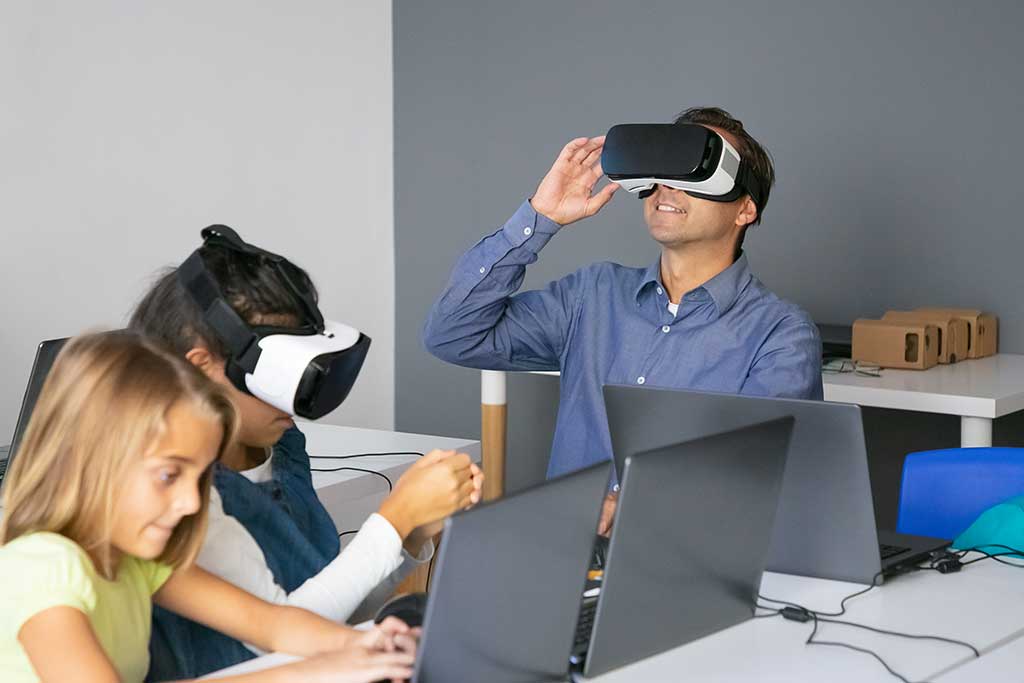
This connects to the idea of the Metaverse. Think of the Metaverse as the next version of the internet—a shared, virtual space that you can step into. Instead of just watching a video of a concert on a flat screen, you could put on a VR headset and feel like you are standing in the front row in a virtual arena. In India, this could transform education, allowing students to take a virtual field trip to the Taj Mahal from their classroom, or it could create new virtual shopping malls and meeting spaces.
A Greener Tomorrow: Green Technology
As the world faces climate change, one of the most crucial trends is Green Tech—technology focused on creating a sustainable and clean environment. This is not just one technology, but a collection of solutions.
The most visible part in India is the shift to Electric Vehicles (EVs). You are starting to see more electric scooters, rickshaws, and cars on the road. These vehicles run on batteries instead of petrol or diesel, reducing air pollution and noise. Alongside this, companies are working on better ways to generate and store solar and wind energy. Green Tech also includes innovations in creating biodegradable plastics and finding new ways to recycle our waste. This trend is all about building a healthier planet for our future generations.
The Building Blocks of Life: Biotechnology
Biotechnology involves using living organisms, like cells and bacteria, to develop new products and technologies that improve our health and our world. It sounds complex, but its impacts are very direct.
In healthcare, we see this with new kinds of medicines and vaccines that are more targeted and effective. The rapid development of mRNA COVID-19 vaccines is a powerful example of biotechnology in action. Beyond medicine, it is used in agriculture to develop seeds that can grow in difficult conditions with less water, which is a huge benefit for Indian farmers facing uncertain monsoons. It even includes lab-grown meat and alternatives to traditional farming to ensure food security.
The Connected World: 5G and the Internet of Things (IoT)
You may have heard about 5G, the next generation of mobile internet. It is not just about downloading movies faster on your phone. 5G offers incredibly low delay, or latency, which means devices can communicate with each other almost instantly.
This supercharges the Internet of Things (IoT). IoT simply means connecting everyday objects to the internet. Imagine a “smart farm” where soil sensors can tell the irrigation system exactly when and where to water crops, saving precious water. In your home, a “smart” AC could turn on automatically just before you arrive, or your fridge could notify you when you are running low on milk. 5G and IoT together will create a world where our environment is more responsive and efficient.
The Power of Data: Blockchain and Cryptocurrency
While often linked with cryptocurrencies like Bitcoin, the technology behind them, called Blockchain, has many other uses. Think of a blockchain as a digital ledger or record book that is shared across many computers. Once a transaction is recorded, it is very difficult to change or cheat the system.
This creates a powerful sense of trust and transparency. In India, this could be used to create land records that cannot be tampered with, preventing fraud. It could be used to track a food product from the farm to your local store, so you can be sure of its quality and origin. While cryptocurrency is a controversial and risky financial asset, the underlying blockchain technology has the potential to make many of our systems more secure and reliable.
Embracing the Future with Awareness
These emerging trends are powerful and exciting. They promise to solve some of our biggest challenges and open up incredible new opportunities. However, it is also important to approach them with awareness. We must think about issues like data privacy, the digital divide between cities and villages, and the need for new skills for the jobs of the future.
The key is not to be afraid, but to be curious. The future is not something that just happens to us; it is something we can help build. By understanding these trends, we can make better choices—in our education, our careers, and our daily lives—to thrive in the exciting world that is coming.
Previous Post
Next Post




Advertisement

Advertisement