

















Now Reading: The Great Indian Education Debate: Can Online Learning Replace the Traditional Classroom?
-
01
The Great Indian Education Debate: Can Online Learning Replace the Traditional Classroom?
The Great Indian Education Debate: Can Online Learning Replace the Traditional Classroom?



Is online learning the future? Explore the strengths of digital and traditional classrooms in the Indian context. Discover why a blended model, combining tech's flexibility with the classroom's human touch, is the true path forward for education.
The Two Classrooms of Modern India
Picture two contrasting scenes from homes across India today. In one, a child sits on the floor of a modest village home, a smartphone propped up on a stack of books. Through the screen, a teacher from a faraway city explains the wonders of the solar system in crisp, clear Hindi. For this child, the digital device is a magical window to an education that was once beyond reach.
In another scene, in a bustling city apartment, a teenager logs into her fifth online class of the day. She is learning from the best educators, but her back aches, her eyes feel strained, and she misses the sound of her friends’ laughter in the school corridor during break time. She is connected, yet she feels a profound sense of isolation.
These two scenes perfectly capture the great Indian education debate that has been raging in living rooms, staff rooms, and policy meetings: Can online learning replace the traditional classroom? It is a question that became urgent during the pandemic and has remained relevant ever since. The answer, as we will explore, is not a simple ‘yes’ or ‘no’. It is a more nuanced, more Indian, and ultimately more promising path forward—one that blends the best of both worlds to create a more inclusive and effective future for our children.
The Rise of the Digital ‘Gurukul’: The Undeniable Strengths of Online Learning
The past few years have witnessed online education in India evolve from a niche alternative to a mainstream powerhouse. Its appeal, especially in a country as vast and diverse as ours, is rooted in several powerful advantages.
Democratizing Knowledge: Breaking Geographical and Economic Barriers
For decades, quality education in India was concentrated in urban centers. A brilliant student in a remote village in Bihar or a small town in Odisha had limited access to the kind of expert instruction available to a student in South Delhi or South Mumbai. Online learning has fundamentally challenged this imbalance.
With a stable internet connection, a student anywhere in India can now learn from a top-rated educator on platforms like BYJU’S, Unacademy, or Khan Academy. This has democratized knowledge in an unprecedented way. It has also proven to be cost-effective for many families, saving them the expense of relocating to coaching hubs like Kota or paying exorbitant fees for private tuitions. Online learning has become a great equalizer, offering a sliver of the opportunity that was once a privilege of the few.
The Power of Personalization: Learning at Your Own Pace
Every teacher knows that a classroom of forty students has forty different learning speeds. The traditional model forces everyone to move in lockstep, often leaving the quick learners bored and the slower ones struggling to keep up. Online platforms solve this problem with elegant efficiency.
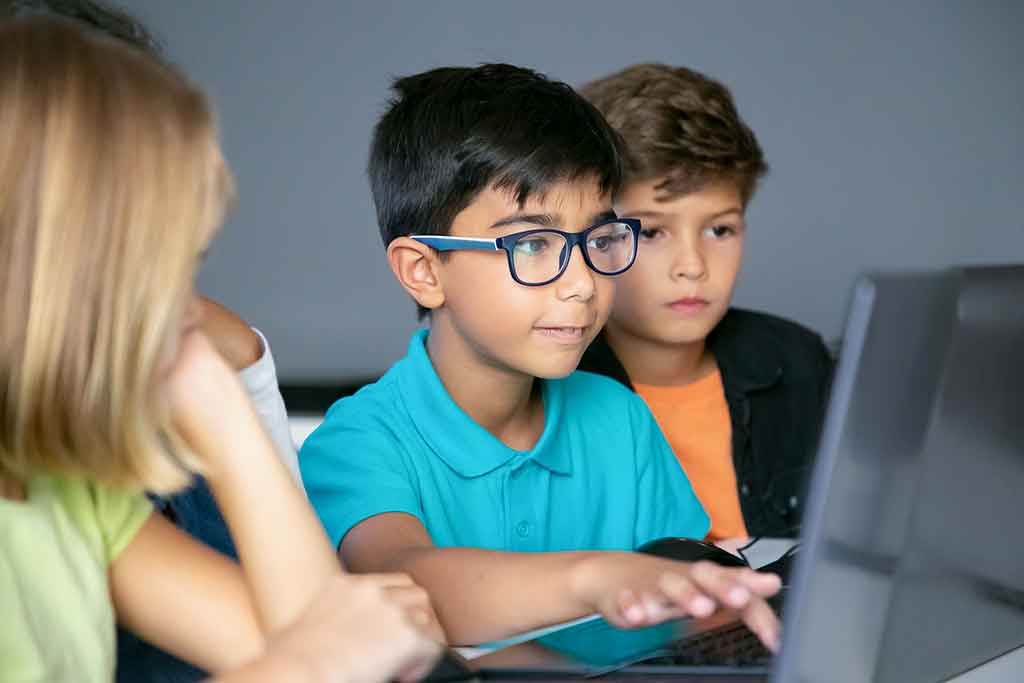
A student who finds a concept in Mathematics difficult can pause, rewind, and rewatch the lecture as many times as needed. There is no fear of being judged by peers for asking a question repeatedly. Conversely, a student who grasps a historical concept quickly can speed ahead, exploring advanced materials without being held back. This self-paced model respects individual learning rhythms and fosters a deeper, more secure understanding of subjects.
A Universe of Resources: Beyond the Textbook
The traditional classroom is often limited to a single textbook and the teacher’s explanation. The digital classroom, however, is a boundless universe of multimedia resources. A chapter on the human heart is no longer just a diagram in a book; it is a beating, pulsating 3D animation that a student can rotate and explore. A lesson on ancient Harappa is brought to life by a virtual tour of the archaeological site.
These interactive tools, educational games, and instantly accessible video libraries cater to different learning styles—visual, auditory, and kinesthetic. They make learning an engaging, multi-sensory experience that can spark curiosity in ways a static textbook often cannot.
The Soul of the School: The Irreplaceable Magic of the Traditional Classroom
Despite the impressive rise of digital learning, the brick-and-mortar classroom holds its ground with a set of advantages that are deeply human and, many would argue, irreplaceable.
The Hidden Curriculum: Learning to Live Together
School is about so much more than academics. It is where we learn the “hidden curriculum” of life—how to make friends, how to resolve a conflict on the playground, how to share your tiffin, how to work as a team on a group project, and how to show respect to your teachers and peers. These social and emotional skills are the bedrock of a well-rounded personality and future success.
The spontaneous interactions, the shared celebrations during school festivals, the collective groan during a surprise test, and the camaraderie of sports day are formative experiences that shape a child’s character. This ecosystem of social learning is nearly impossible to replicate in a virtual environment, where students are often isolated in their own digital bubbles.
The Teacher’s Gaze and Immediate Feedback
There is an intangible connection between a teacher and a student in a physical classroom. A good teacher doesn’t just deliver a lecture; they “read the room.” They can see the confused look on a student’s face and instantly rephrase their explanation. They can offer an encouraging smile to a shy student, prompting them to participate. This live, non-verbal feedback loop is a powerful tool for effective teaching that is lost in a grid of video conferencing screens.
The immediate clarification of doubts, the ability to guide a student’s hand in a chemistry experiment, or to correct their posture in an art class—these moments of direct, hands-on engagement are the hallmark of traditional learning, especially for practical subjects.
Structure, Discipline, and a Safe Haven
For many children, school provides a crucial structure and a sense of routine that is vital for their development. The fixed timetable, the discipline of arriving on time, and the physical separation between home and school environments help cultivate focus and a dedicated mindset for learning.
Furthermore, schools often act as a safe haven—a protected space away from domestic pressures or, for some underprivileged children, a place that provides a nutritious midday meal. The school is not just an institution; for millions, it is a sanctuary and a pillar of stability in their lives.
The Indian Context: Where Theory Meets Reality
Any discussion on education in India is incomplete without considering our unique ground realities. The potential of online learning bumps against some stark challenges.
The Digital Divide: A Tale of Two Indias
The dream of a digitally educated India is contingent on one crucial factor: access. The “digital divide” is not just a phrase; it is a painful reality. While urban, middle-class families may have high-speed broadband and individual devices for their children, millions of students in rural areas and from economically weaker sections struggle with network connectivity, lack of electricity, and the inability to afford a smartphone or laptop. Relying solely on online education risks excluding an entire generation of children, deepening existing social and economic inequalities.
The Cultural Fabric of the Indian Family
Education in India is not merely an individual pursuit; it is a family aspiration. Parents and grandparents play an active role in a child’s learning journey. For many families, especially those where parents may not be highly educated themselves, trusting the process of a physical school with a recognized teacher is easier than navigating the complexities of digital platforms. The school is a trusted institution, and the teacher is a respected figure, or guru, whose role extends beyond academics. This cultural and emotional trust in the traditional system is a powerful force.
The Winning Formula: A Blended Future for Indian Education
So, where does this leave us? The evidence suggests that framing the debate as an “either-or” battle is counterproductive. The most sensible, sustainable, and effective path forward is a blended learning model that strategically integrates the strengths of both online and traditional methods.
What is Blended Learning in Practice?
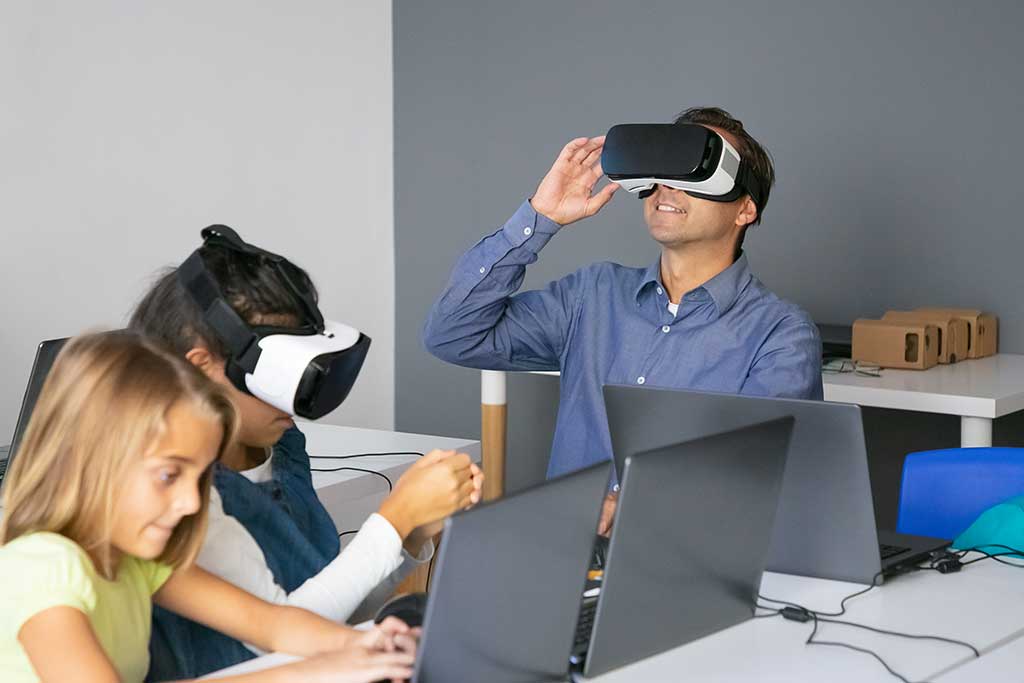
Imagine a classroom where the teacher uses the traditional blackboard to explain the core concept of a chapter. Then, to deepen understanding, she asks students to use their tablets to watch a short, animated video on the topic from a trusted educational channel. Following this, the class divides into groups for a hands-on activity or a project, applying what they have learned. For homework, instead of a repetitive writing exercise, students log into a secure platform like Google Classroom to take a fun, gamified quiz like Kahoot! to reinforce their learning.
This is blended learning. The teacher remains the central guide—the “sage on the stage” and the “guide on the side.” Technology is used as a powerful tool to enhance, not replace, their teaching. It allows for more personalized attention, as routine instruction can be handled online, freeing up the teacher’s time in class for higher-value interactions like mentoring, doubt-solving, and fostering critical thinking.
The Role of Stakeholders in This New Ecosystem
For this blended future to succeed, everyone has a part to play:
- For Schools and Teachers: The need is for continuous teacher training, or professional development, to equip educators with the skills and confidence to use technology effectively in their lesson plans.
- For Parents: Parents need to adopt a supportive role, understanding that this new model is different but beneficial. Their involvement in creating a balanced routine for their children, combining screen time with physical activity and social play, is crucial.
- For Policymakers: The government’s focus must be on bridging the digital divide through infrastructure development and providing affordable access to technology for all. Initiatives like the Digital India campaign must have education at their core.
Conclusion: The Classroom is Evolving, Not Dying
The question, therefore, is not whether online learning can replace the traditional classroom, but how we can wisely blend the two to create a more resilient, inclusive, and dynamic education system for the India of the 21st century.
The traditional classroom, with its human touch and social soul, is not becoming obsolete. It is evolving. It is shedding its role as the sole repository of information and transforming into a vibrant hub of collaboration, creativity, and critical thinking. Online learning, in turn, is not a threat but a tremendous supplement—a library, a tutor, and a laboratory that fits in your pocket.
The future of Indian education lies not in choosing between the blackboard and the digital board, but in learning to write on both. It is a future where every child, regardless of their postal code, has the opportunity to learn in the way that helps them shine brightest.
Previous Post
Next Post




Advertisement

Advertisement